Steps in this chapter (6)
Know-your-client files and the partner's risk rating, statutory registers, minutes and CAC filings, tax matters and tax clearance certificates.
KYC, secretarial and tax in the menu holds the firm's client due diligence, the statutory books of company clients and its dealings with the revenue authorities. Staff can read it; managers record; partners approve KYC risk ratings and minutes.
26.1 Record a director or beneficial owner
Why
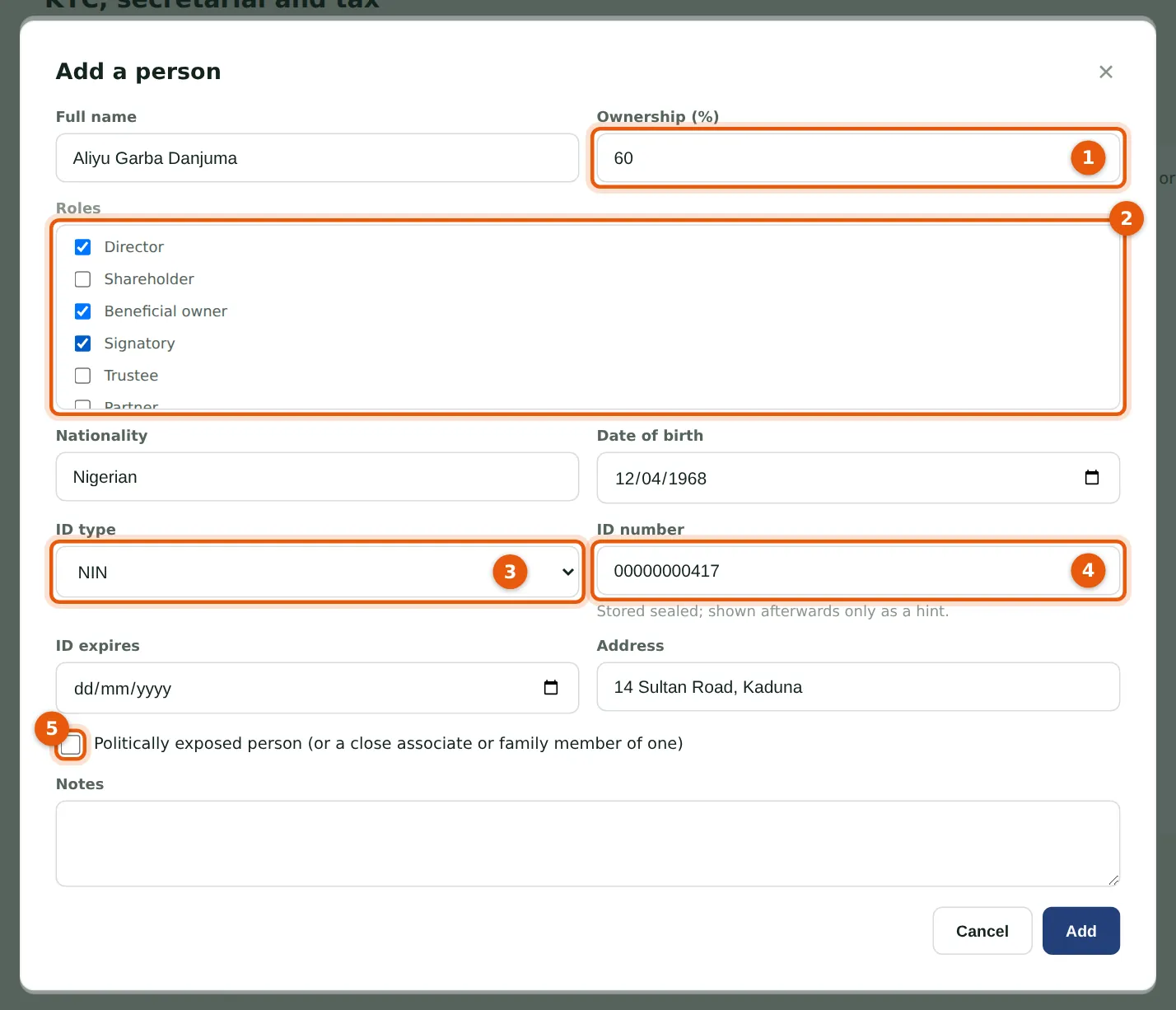
For each director, shareholder, beneficial owner and signatory: their share (1), roles (2), ID type (3) and number (4), and whether they are a politically exposed person (5). The ID number is sealed and shown only by its last four digits; seeing it in full needs a partner's fresh code and is recorded in the audit trail. Someone other than the person who entered it verifies the identity.
Who
Manager, partner, practice administrator or owner.
What to do
- Choose KYC, secretarial and tax, then the client, then Add a person.
- Fill in the details and choose Add; upload copies under ID documents.
26.2 The checks and the partner's risk rating
Why
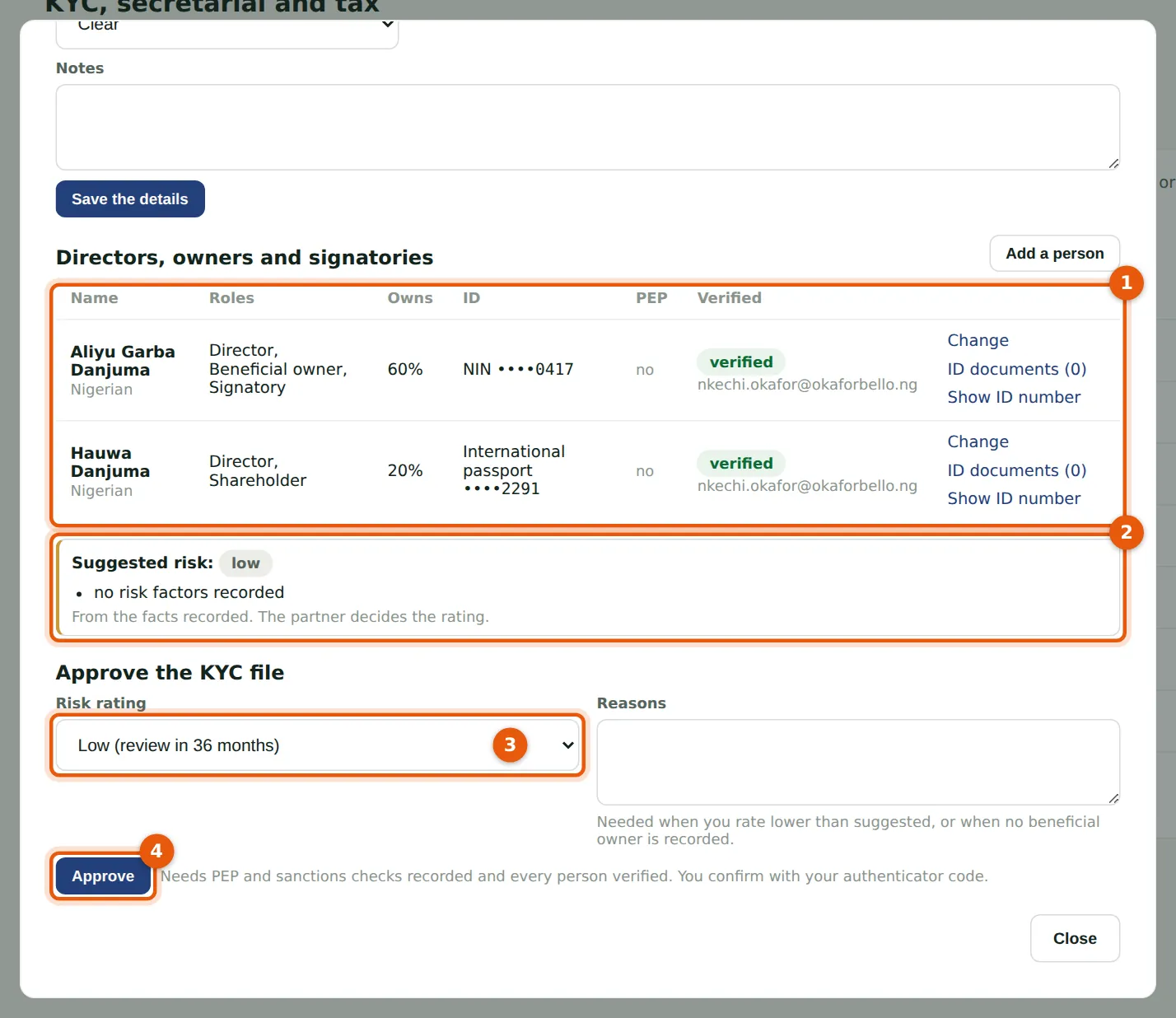
Tunde recorded the business, the source of funds and the PEP, sanctions and adverse media checks with their sources; Nkechi verified each person (1). PracticeTrove suggests a rating (2) from the facts; the partner chooses the rating (3) — a lower one needs reasons — and approves (4) with a fresh code. The next review falls due in 12, 24 or 36 months for high, medium or low risk.
Who
Partner, practice administrator or owner.
What to do
- Open the client's KYC file.
- Check the people and checks, choose the rating and choose Approve, then enter your authenticator code.
26.3 Statutory registers
Why
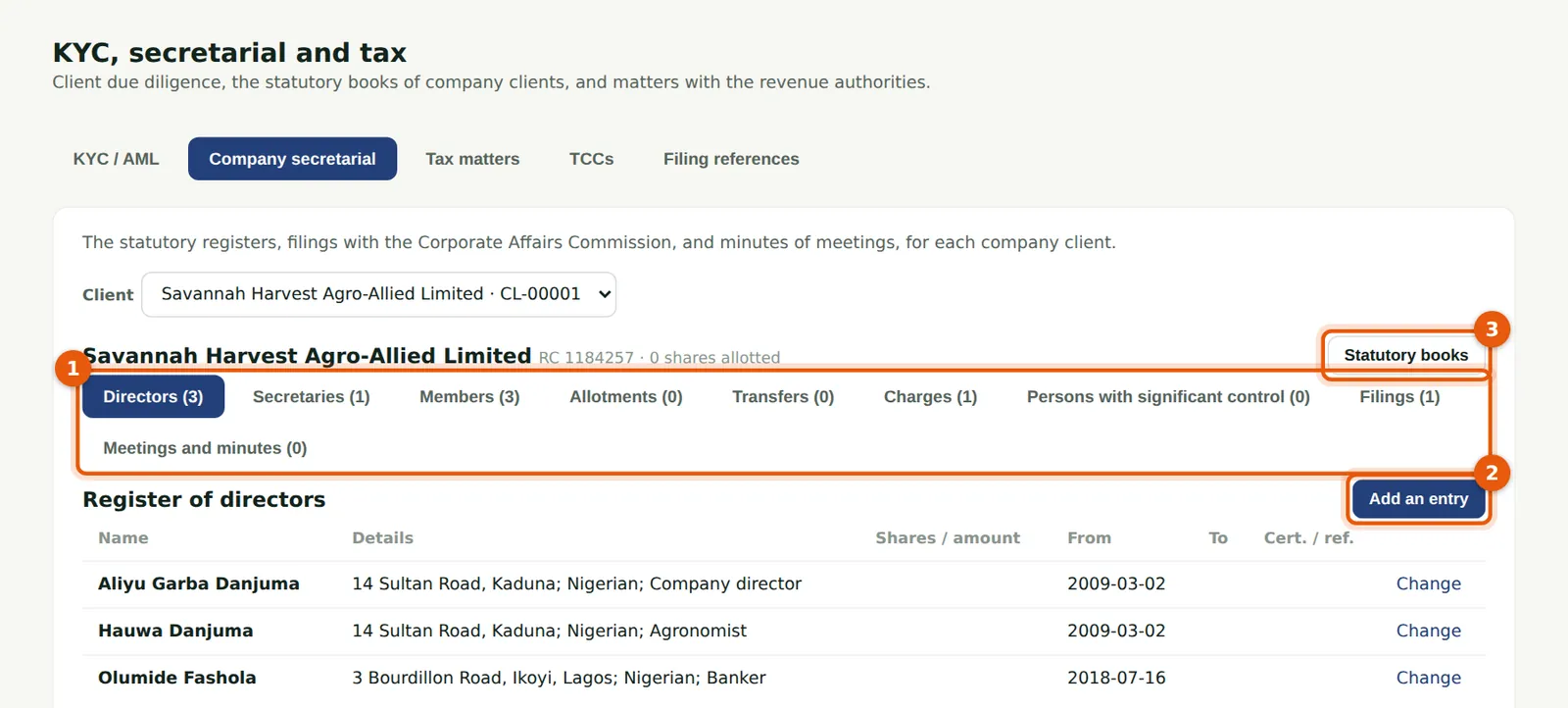
Each company client has its registers (1): directors, secretaries, members, allotments, transfers, charges and persons with significant control, with its CAC filings and minutes. Add an entry (2); end an entry with its date rather than deleting it. Statutory books (3) prints the registers, filings and minutes together.
Who
Manager and above keep them; staff and viewers read them.
What to do
- Choose Company secretarial and the client.
- Choose a register and Add an entry.
26.4 Minutes and resolutions
Why
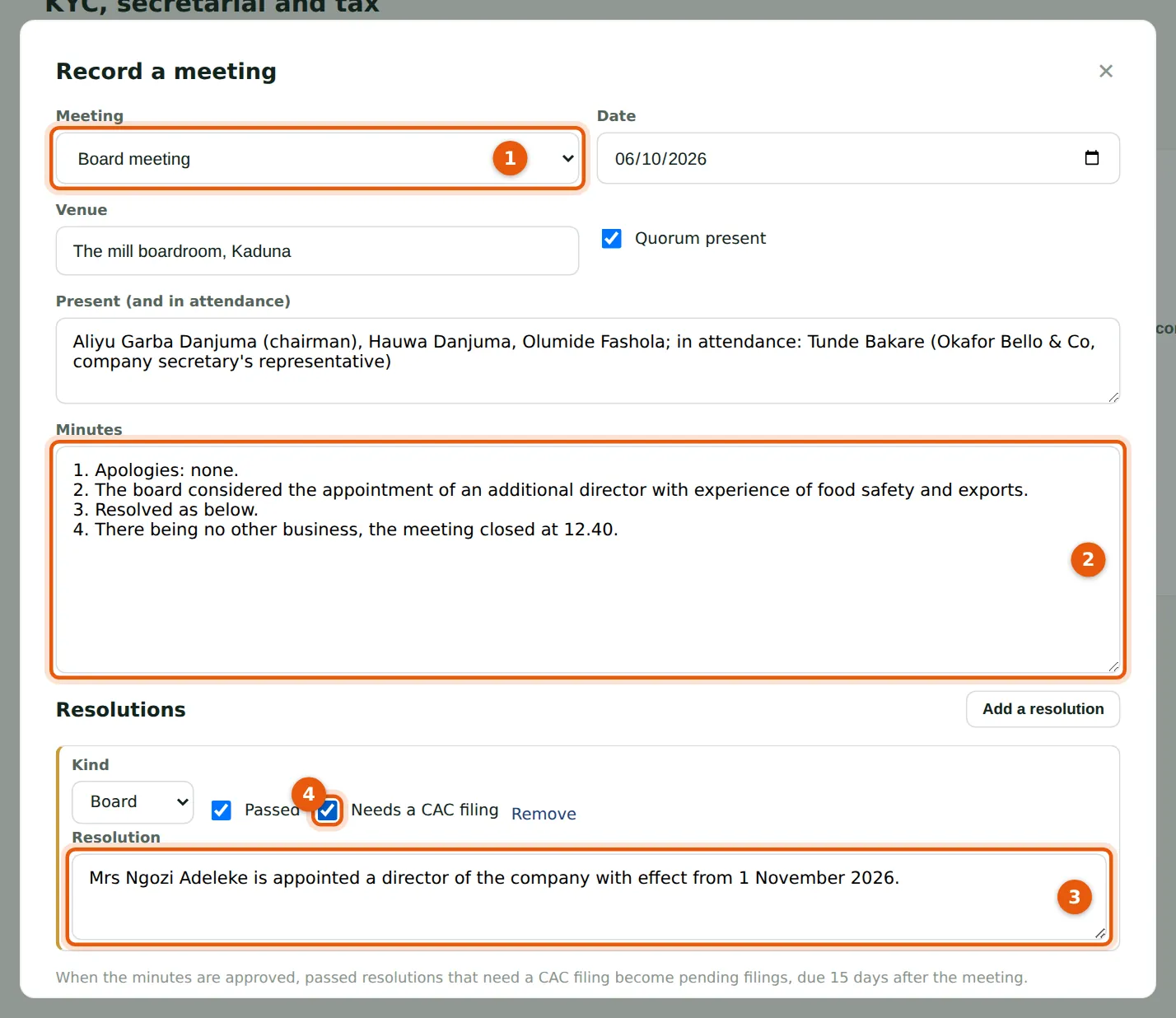
Tunde records the board meeting (1) that appointed a new director: the minutes (2) and the resolution (3). A passed resolution that needs a CAC filing (4) becomes a pending filing, due 15 days after the meeting, when a partner approves the minutes. Approved minutes are locked; attach the signed copy.
Who
Manager and above record; a partner approves.
What to do
- Choose Meetings and minutes, then Record a meeting.
- Fill in the meeting and resolutions and choose Record. A partner opens it and chooses Approve the minutes.
26.5 Record a tax matter
Why
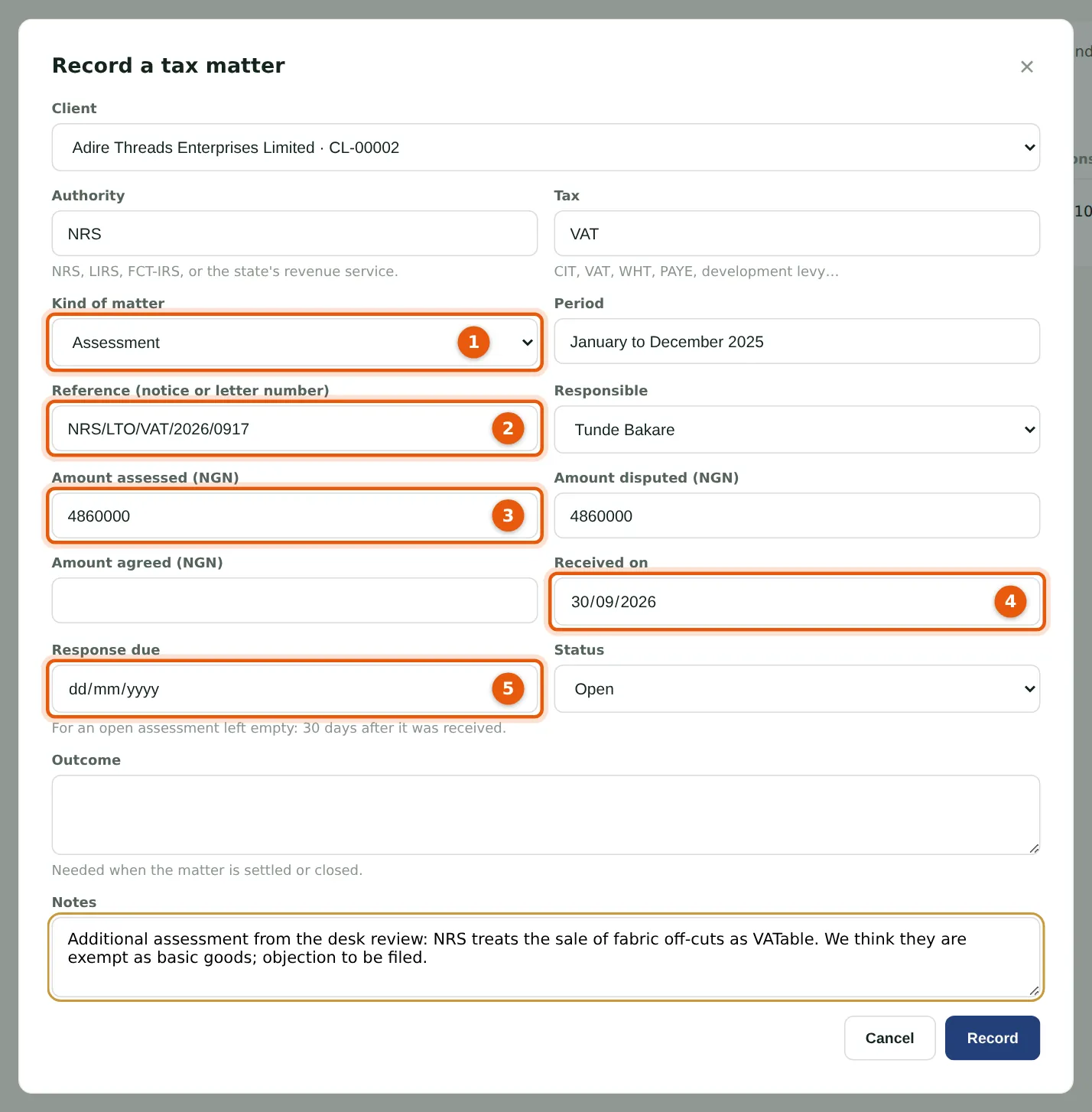
NRS has raised an additional VAT assessment on Adire Threads. The matter has its kind (1), the notice's reference (2), the amounts assessed, disputed and agreed (3), the date received (4) and the date a response is due (5; for an open assessment left empty, 30 days after receipt). Letters, meetings and payments are added as events.
Who
Manager, partner, practice administrator or owner.
What to do
- Choose Tax matters, then Record a tax matter.
- Fill in the matter and choose Record; add letters as events. Settling or closing needs the outcome.
26.6 Tax clearance certificates
Why
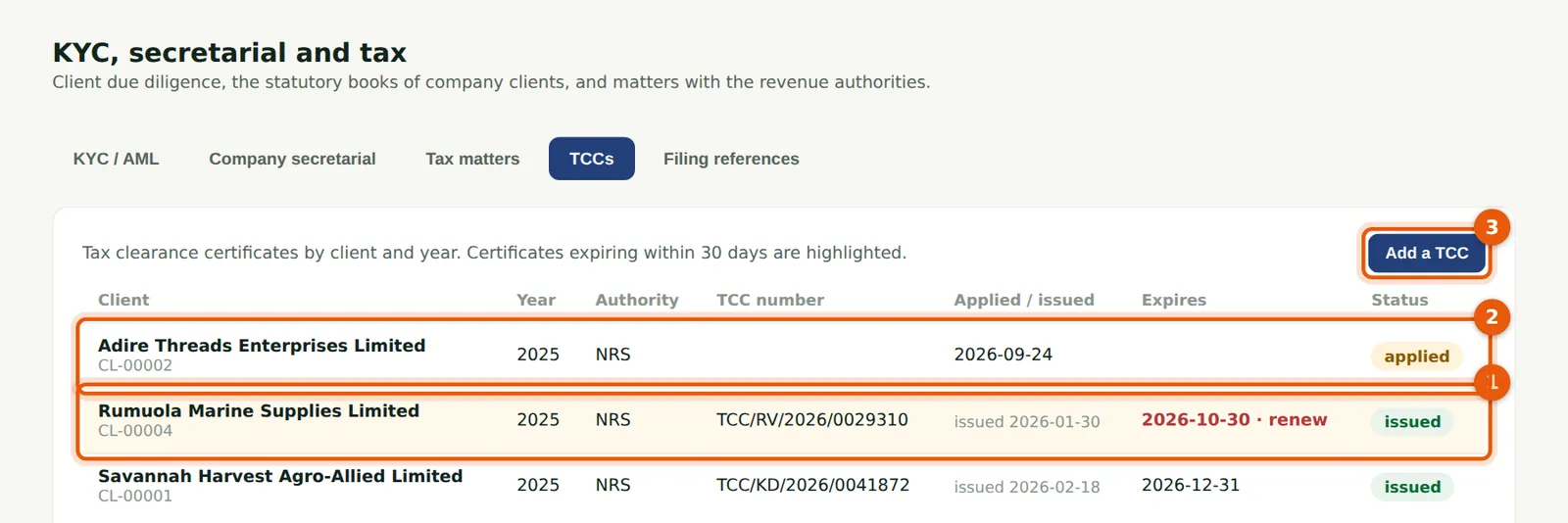
Each client's tax clearance certificate by year. Rumuola Marine's (1) expires within 30 days, so it is highlighted and its renewal is reminded; Adire Threads' (2) has been applied for. Add a TCC (3). Filing references lists the acknowledgements of filed tax work.
Who
Manager and above; staff and viewers read them.
What to do
- Choose TCCs, then Add a TCC or a row to change it.