Steps in this chapter (10)
Prepare the evaluation as at the evaluation date from frozen evidence, conclude on each component and overall under ISQM 1.54, and sign it as the individual with ultimate responsibility.
ISQM 1.53–55 require the individual with ultimate responsibility to evaluate the system at least once a year, as at a point in time, and to conclude whether it provides reasonable assurance that its objectives are achieved (54(a)), does so except for severe but not pervasive deficiencies (54(b)), or does not (54(c)). ISQM 1.55 requires prompt action and communication when the conclusion is 54(b) or 54(c).
Okafor Bello & Co's evaluation date is 30 June. Emeka Obi prepares the 2026 evaluation on 20 July; Adaeze Nwosu signs it on 14 August with conclusion 54(b), because DF-00001 is severe, not pervasive and still being remediated.
15.1 Start the evaluation
Why
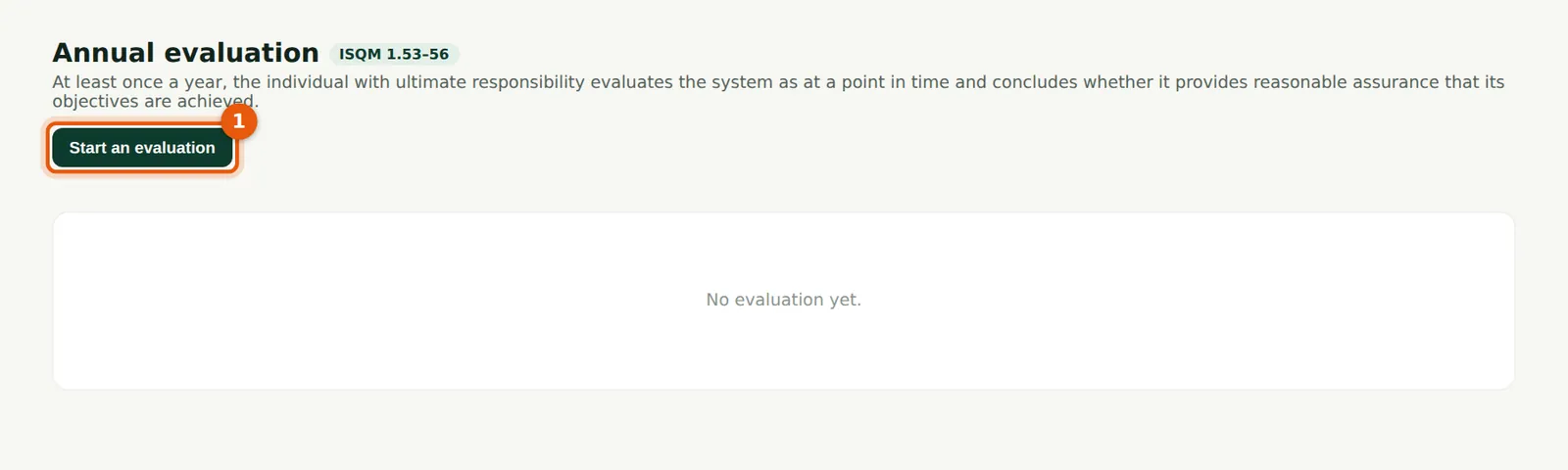
The page lists the firm's evaluations. Start one (1) after the evaluation date.
Who
Quality lead (prepares).
What to do
- Choose Start an evaluation (1).
15.2 Choose the evaluation date
Why
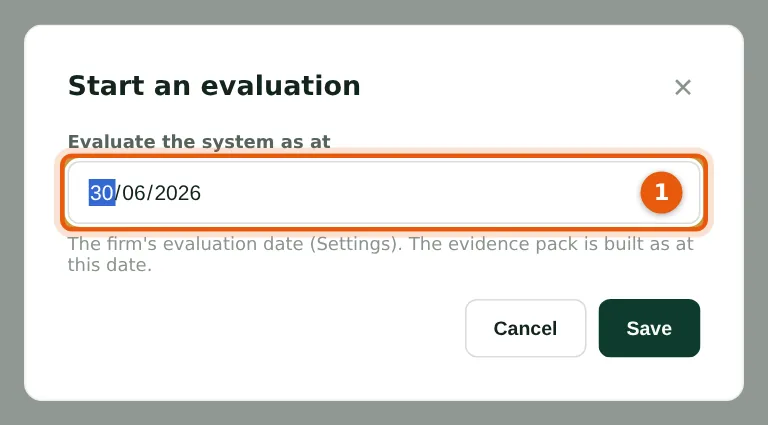
The date (1) defaults to the firm's evaluation date (Settings). The evidence is gathered as at that date.
Who
Quality lead.
What to do
- Check the date (1) and choose Start.
15.3 The evidence
Why
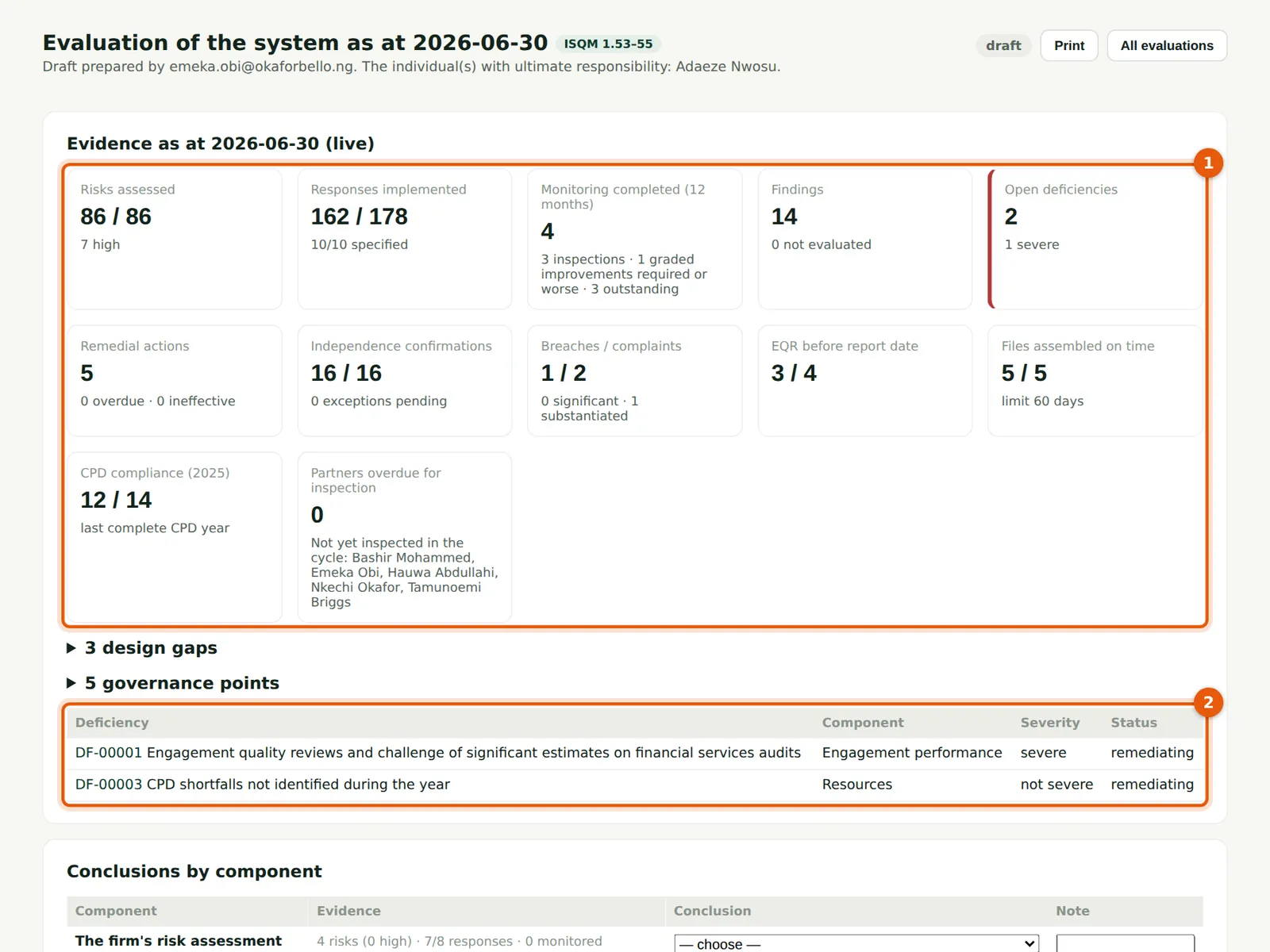
SQMTrove gathers the evidence (1): risks assessed, responses implemented, monitoring completed, findings, open deficiencies, remedial actions, independence confirmations, breaches and complaints, reviews before the report date, files assembled on time, CPD compliance for the last complete year and partners overdue for inspection. The component matrix (2) shows the evidence for each component; design gaps and governance points are listed below.
Who
Quality lead; the Owner reviews.
What to do
- Read each figure (1) and the matrix (2); open the design gaps and governance points.
15.4 Conclude on each component
Why
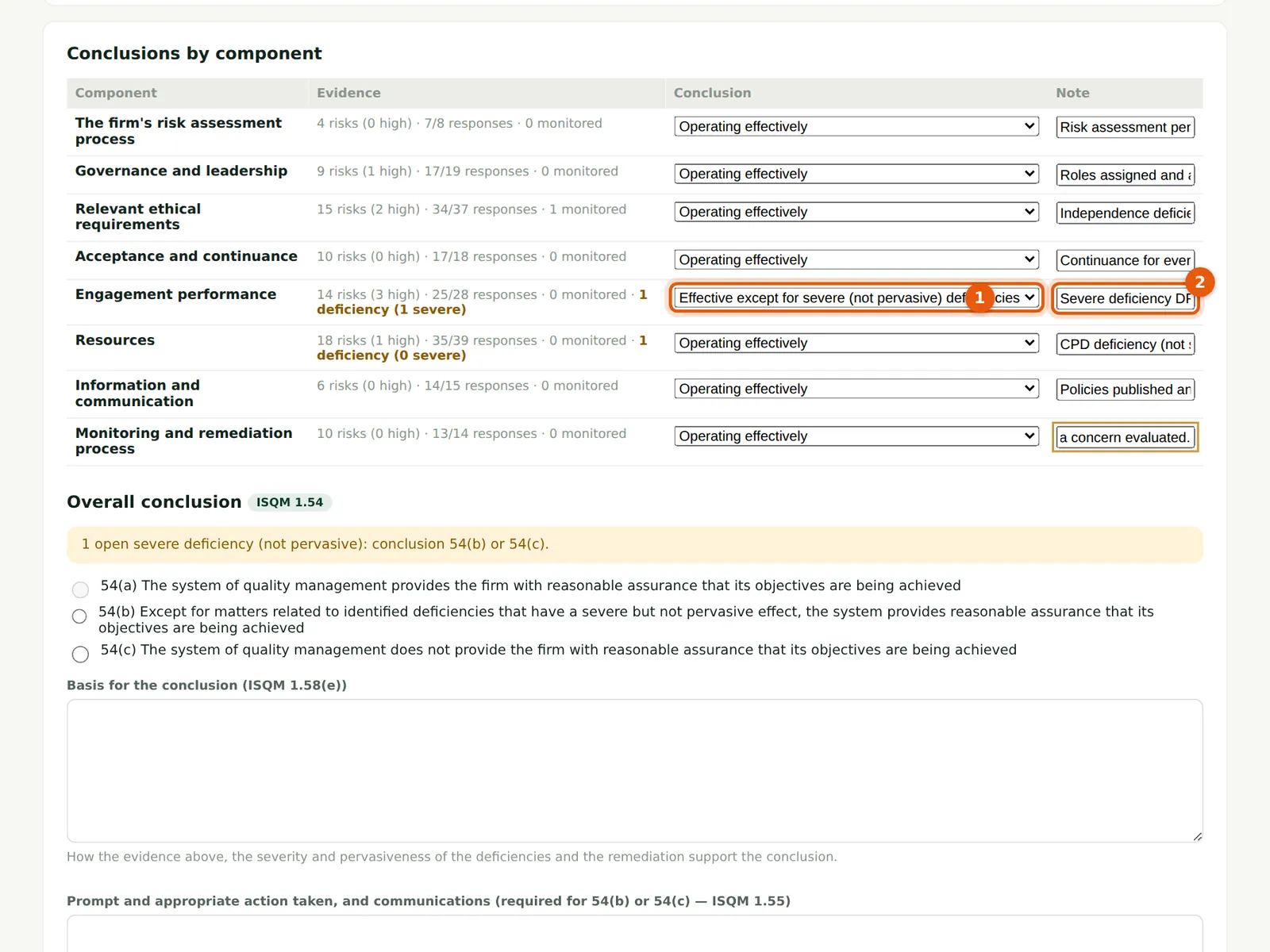
For each component choose whether it operates effectively, effectively except for severe (not pervasive) deficiencies, or not effectively (1), with a note (2). Engagement performance carries DF-00001.
Who
Quality lead.
What to do
- Choose the conclusion (1) and write a note (2) for each component.
15.5 The overall conclusion
Why
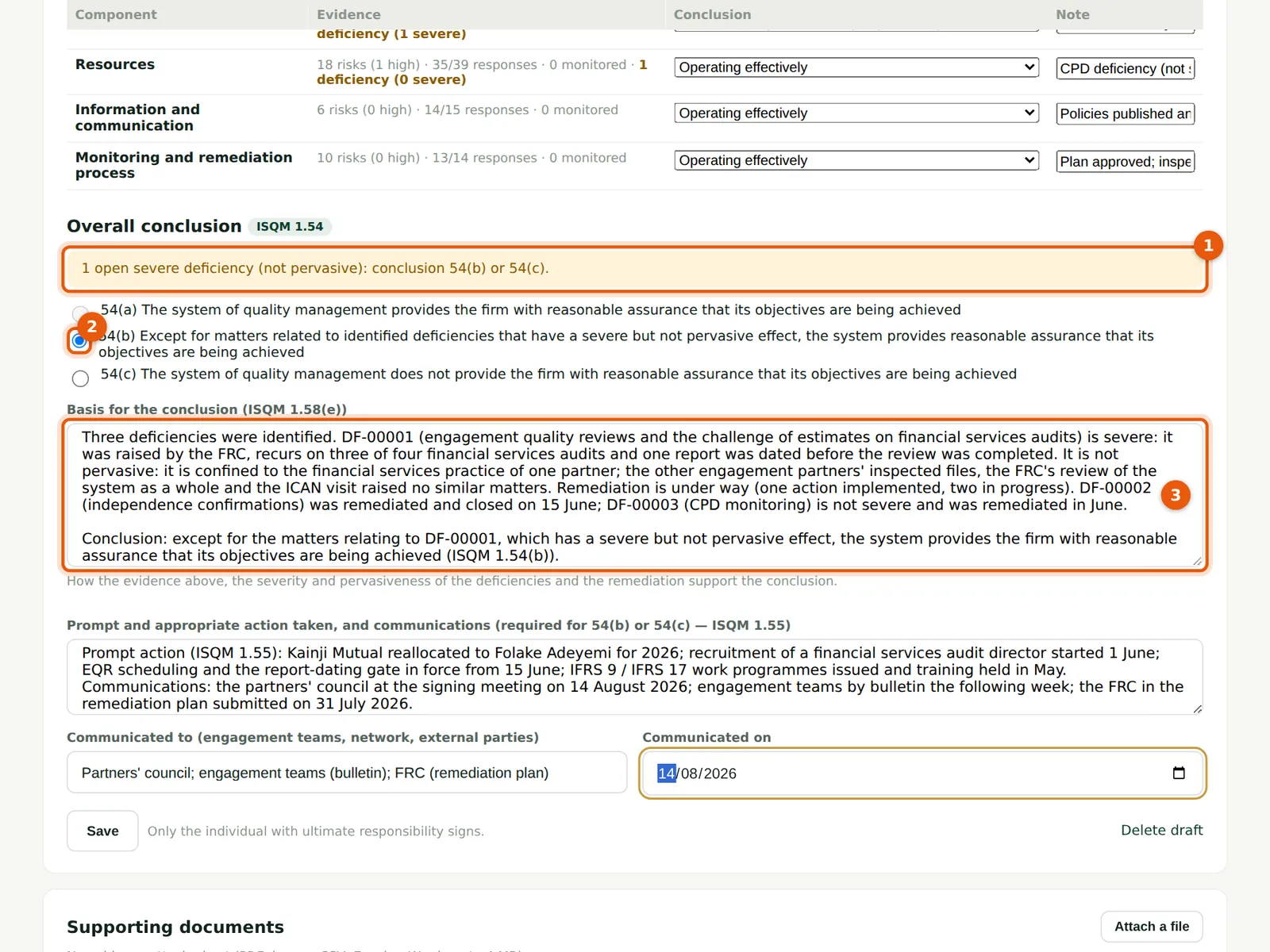
The banner (1) shows which conclusions the open deficiencies allow: with one severe, not pervasive deficiency open, only 54(b) or 54(c). Choose the conclusion (2) and write the basis (3) — ISQM 1.58(e) requires it to be documented.
Who
Quality lead (drafts); the Owner decides.
What to do
- Read the banner (1); choose the conclusion (2); write the basis (3).
15.6 Actions and communications
Why
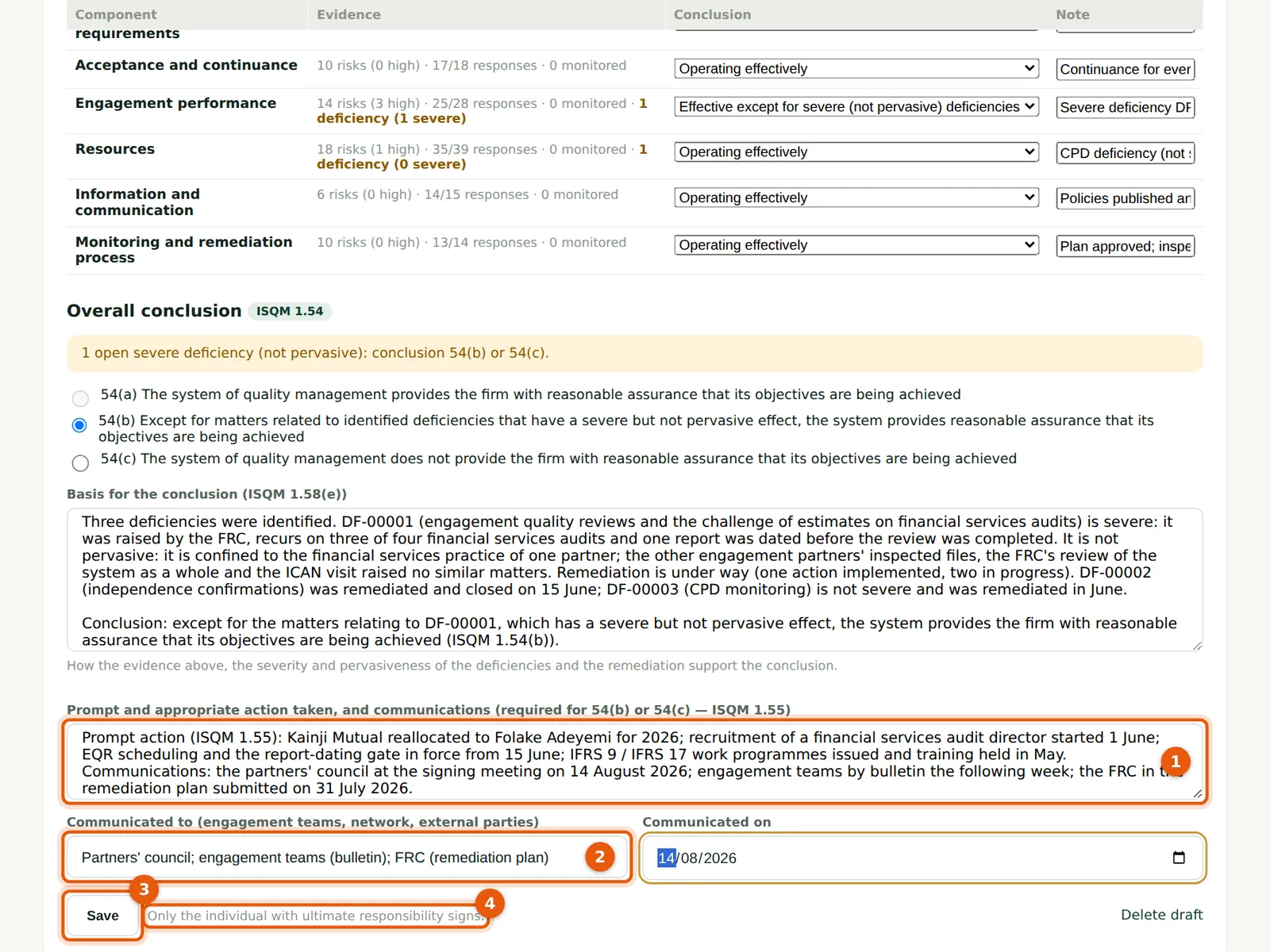
For 54(b) or 54(c), record the prompt and appropriate action taken (1) and to whom the conclusion was communicated (2), and when. Save (3) keeps the draft; only the individual with ultimate responsibility can sign (4).
Who
Quality lead.
What to do
- Record the actions (1), the people communicated to (2) and the date; choose Save (3).
15.7 Sign the evaluation
Why
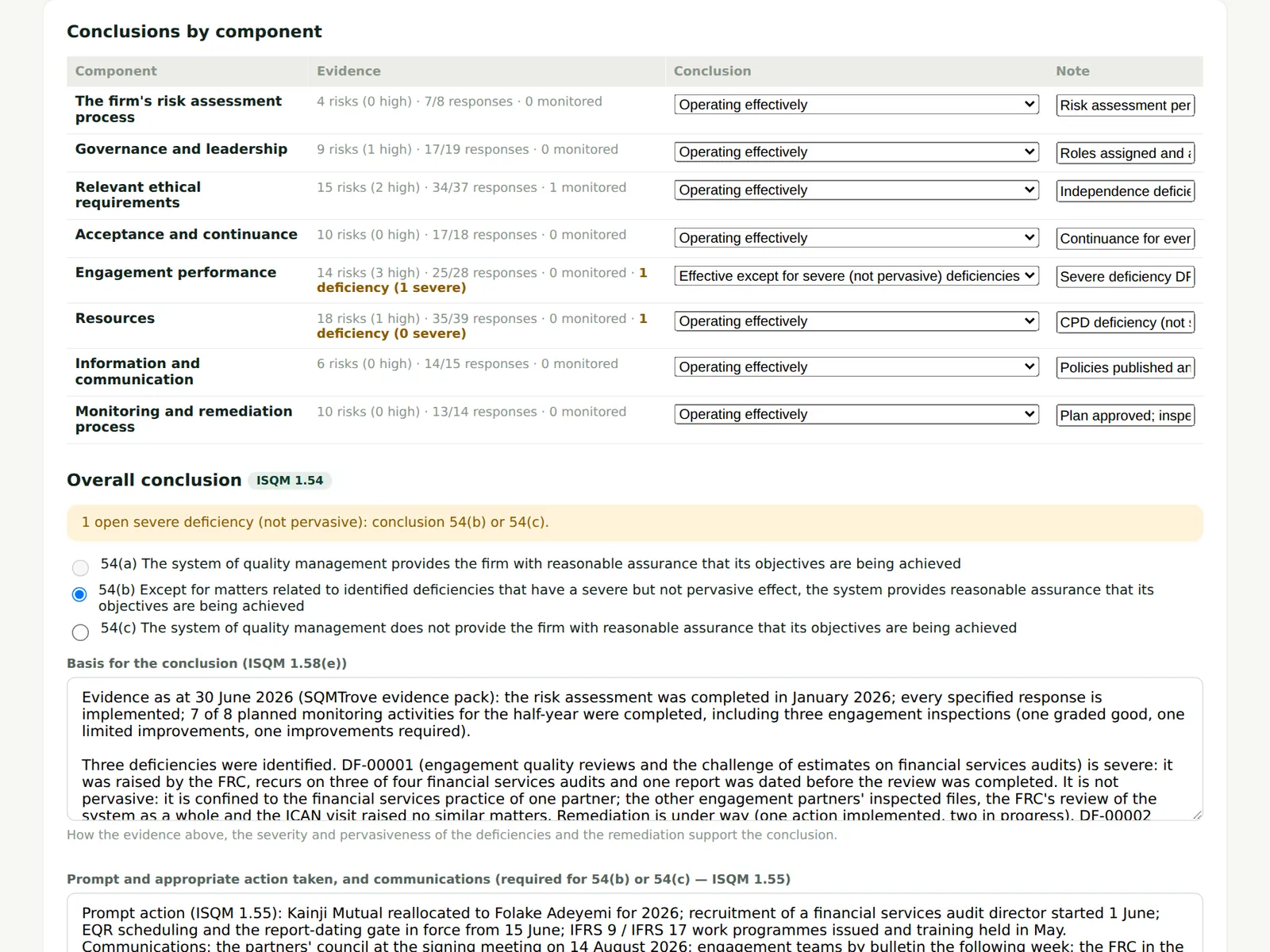
Only the person assigned ultimate responsibility in Governance & leadership sees Sign the evaluation (1).
Who
The individual with ultimate responsibility (the Owner).
What to do
- Read the evaluation and choose Sign the evaluation (1).
15.8 Confirm the signature
Why
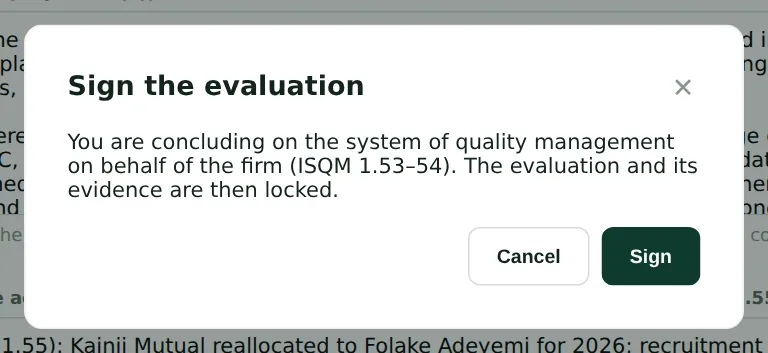
Signing concludes on the system on behalf of the firm. The evaluation and its evidence are then locked.
Who
The individual with ultimate responsibility.
What to do
- Choose Sign.
15.9 The signed evaluation
Why
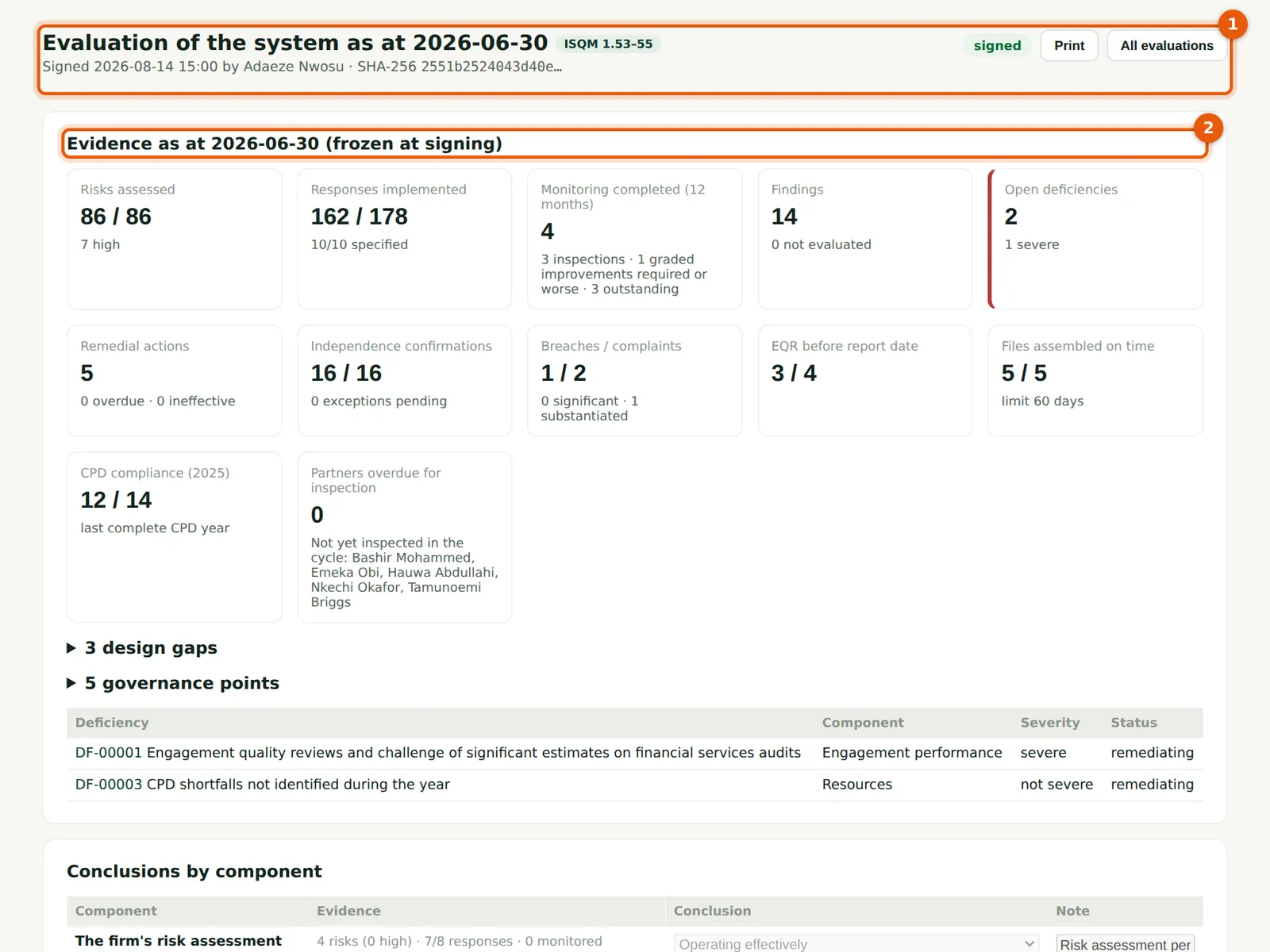
The heading (1) shows who signed and when, with a SHA-256 fingerprint of the record, so any later change would show. The evidence (2) is frozen as it was at signing.
Who
Everyone with access; inspectors.
What to do
- Choose Print for a paper or PDF copy.
15.10 The evaluations register
Why
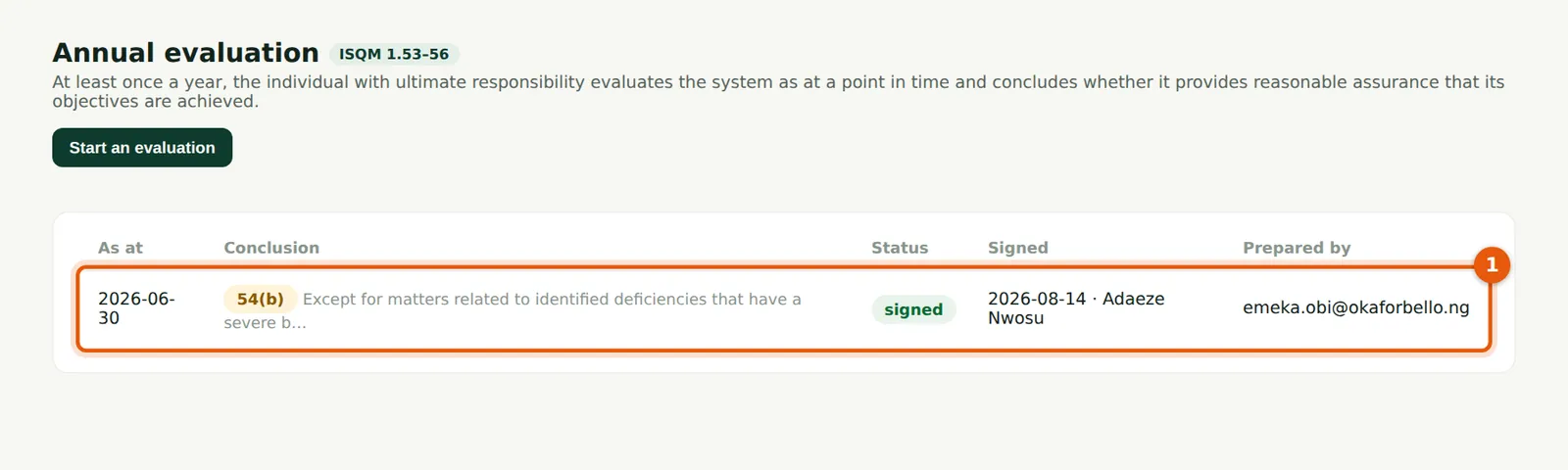
Each evaluation with its conclusion, status and signature (1). The dashboard shows the latest conclusion.
Who
Everyone with access.
What to do
- Choose a row to open the evaluation.