Steps in this chapter (6)
Assign ultimate and operational responsibility for the system, record acknowledgements, and evaluate the leaders' performance each year.
ISQM 1.20 requires the firm to assign ultimate responsibility and accountability for the system to the managing partner (or equivalent), operational responsibility for the system, and operational responsibility for independence and for the monitoring and remediation process. The people assigned must have the experience, knowledge, influence, authority and time for the role and understand it (ISQM 1.21), and have a direct line to the individual with ultimate responsibility (ISQM 1.22). ISQM 1.56 requires periodic performance evaluations of these leaders.
Adaeze Nwosu holds ultimate responsibility. Emeka Obi holds operational responsibility for the system, Hauwa Abdullahi for independence and Kunle Adebayo for monitoring and remediation.
4.1 The four required roles
Why
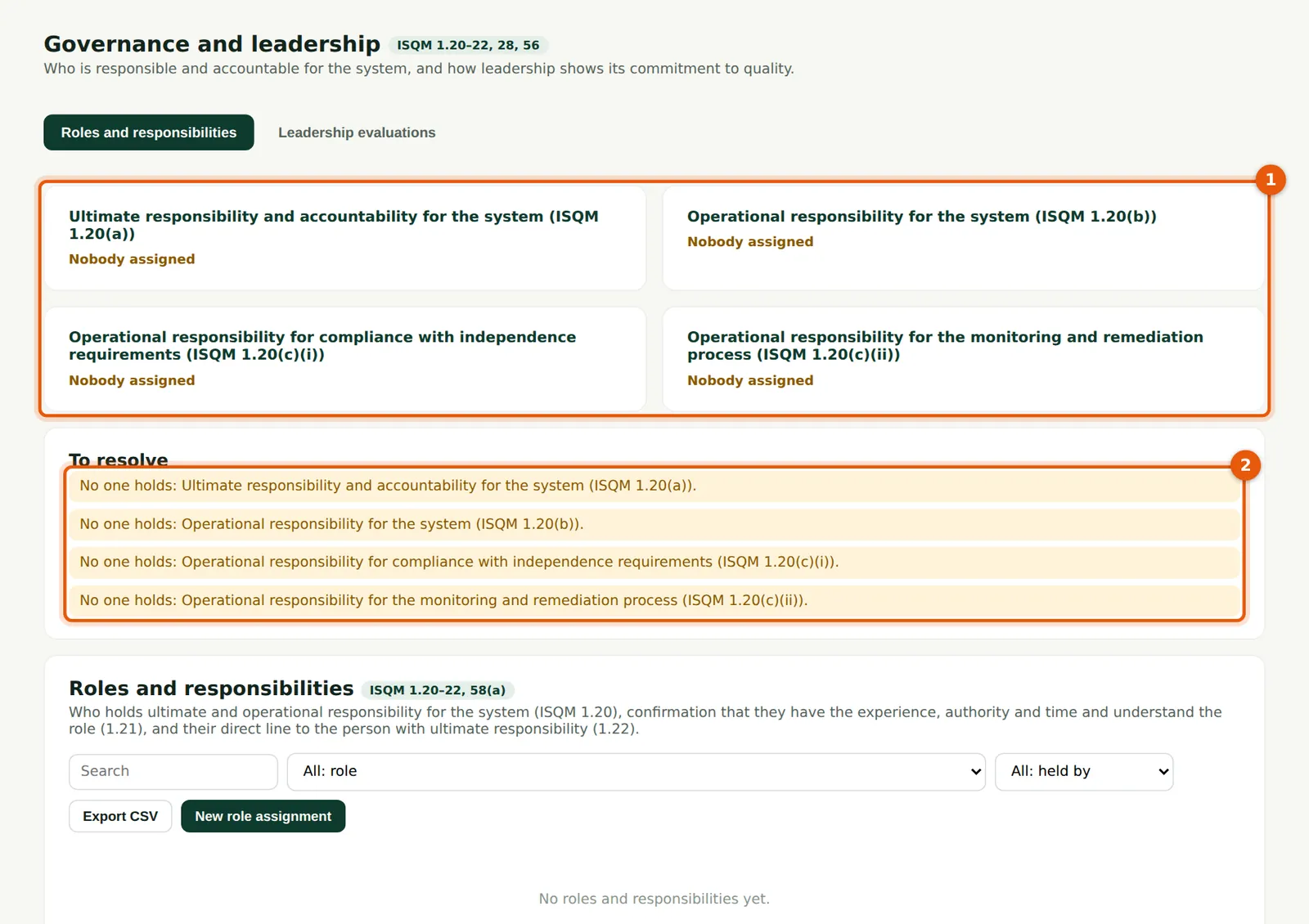
The page shows the four roles ISQM 1.20 requires (1), and lists what is missing (2). Until they are assigned the annual evaluation cannot be signed.
Who
Owner.
What to do
- Open Governance & leadership. Read the roles (1) and the points to resolve (2).
- Choose New role assignment below the cards.
4.2 Assign ultimate responsibility
Why
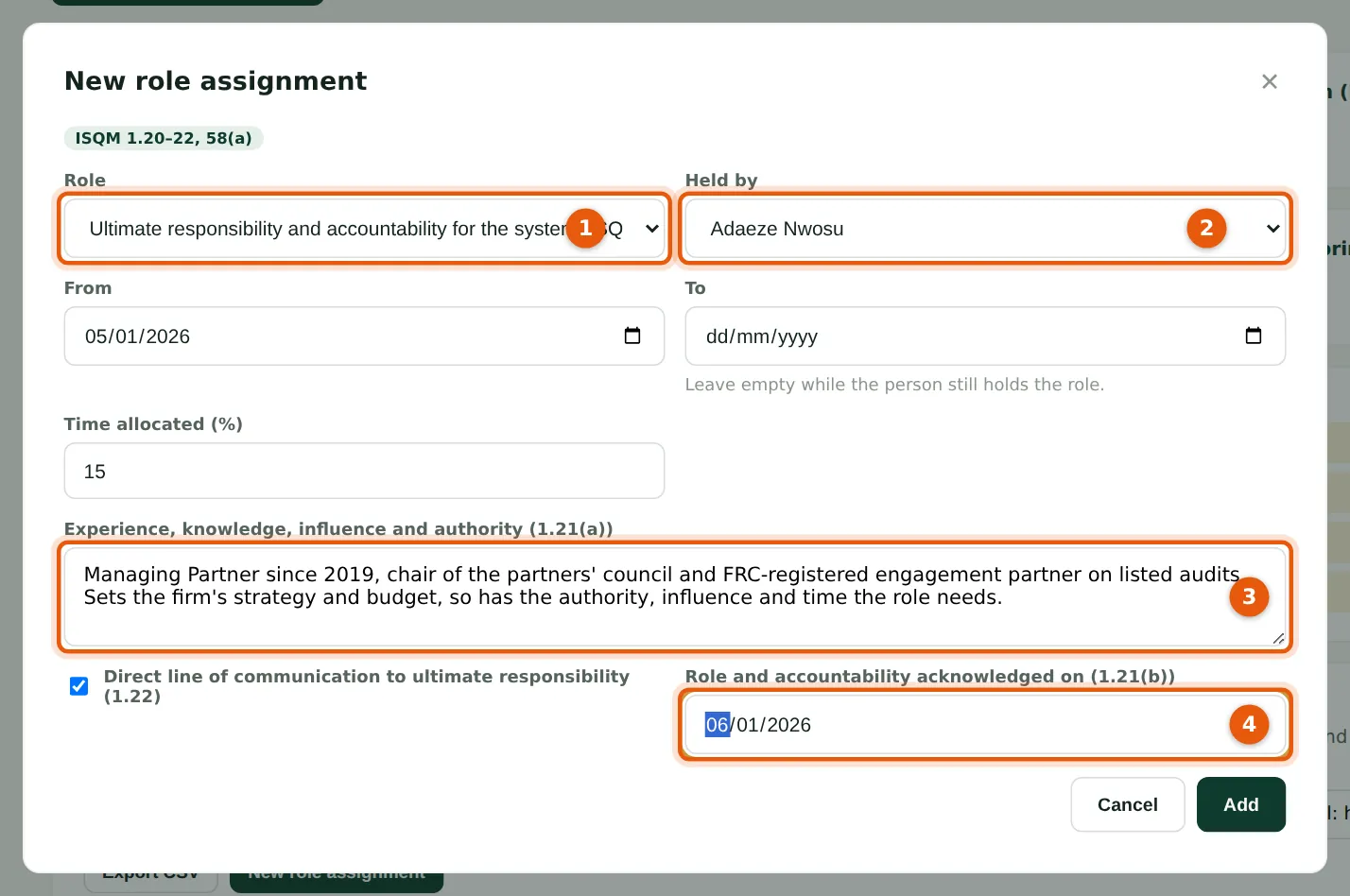
Record the role (1), the person (2), the date the role started, the share of their time, why they have the experience, authority and time for it (3) (ISQM 1.21(a)), whether they have a direct line to the person with ultimate responsibility, and when they acknowledged the role and their accountability (4) (ISQM 1.21(b)).
Who
Owner or firm administrator (ultimate responsibility); Owner, administrator or quality lead (the other roles).
What to do
- Choose the role (1) and the person (2); enter From and the time allocated.
- Describe the person's experience, influence and authority (3).
- Enter the date they acknowledged the role (4) and choose Add.
4.3 Check what is still to resolve
Why
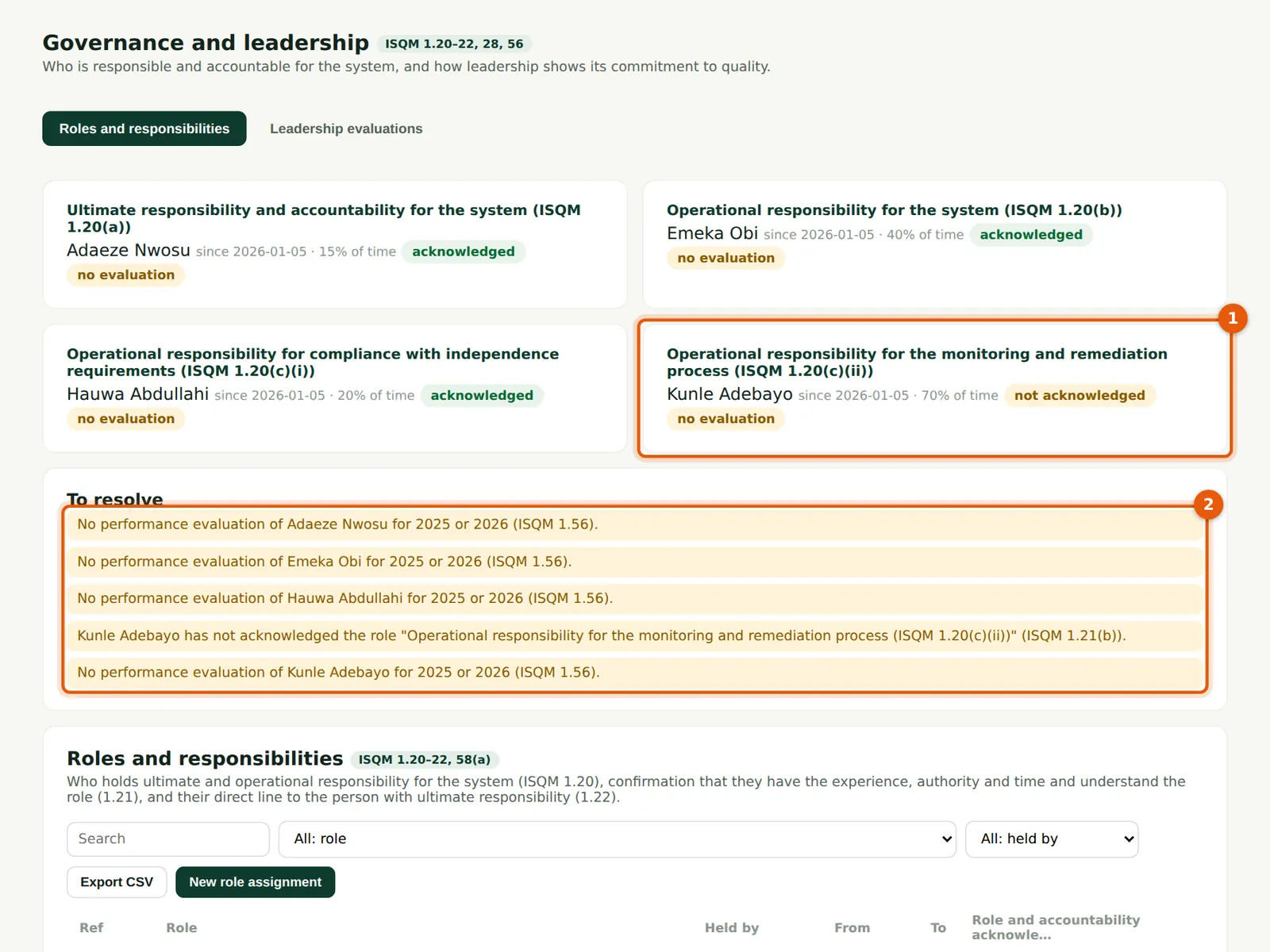
Each card shows who holds the role, since when, their share of time and whether the role is acknowledged. Kunle Adebayo has not yet acknowledged his role (1), and none of the leaders has a performance evaluation for 2025 or 2026 (2). SQMTrove also offers other roles: the person who appoints engagement quality reviewers (ISQM 2.17), the ethics partner, the technical partner and the person who receives complaints.
Who
Owner and quality lead.
What to do
- Open the assignment and add the acknowledgement date when the signed acknowledgement is received.
- Record the leadership evaluations (step 4.4) after the annual evaluation.
4.4 Evaluate a leader's performance
Why
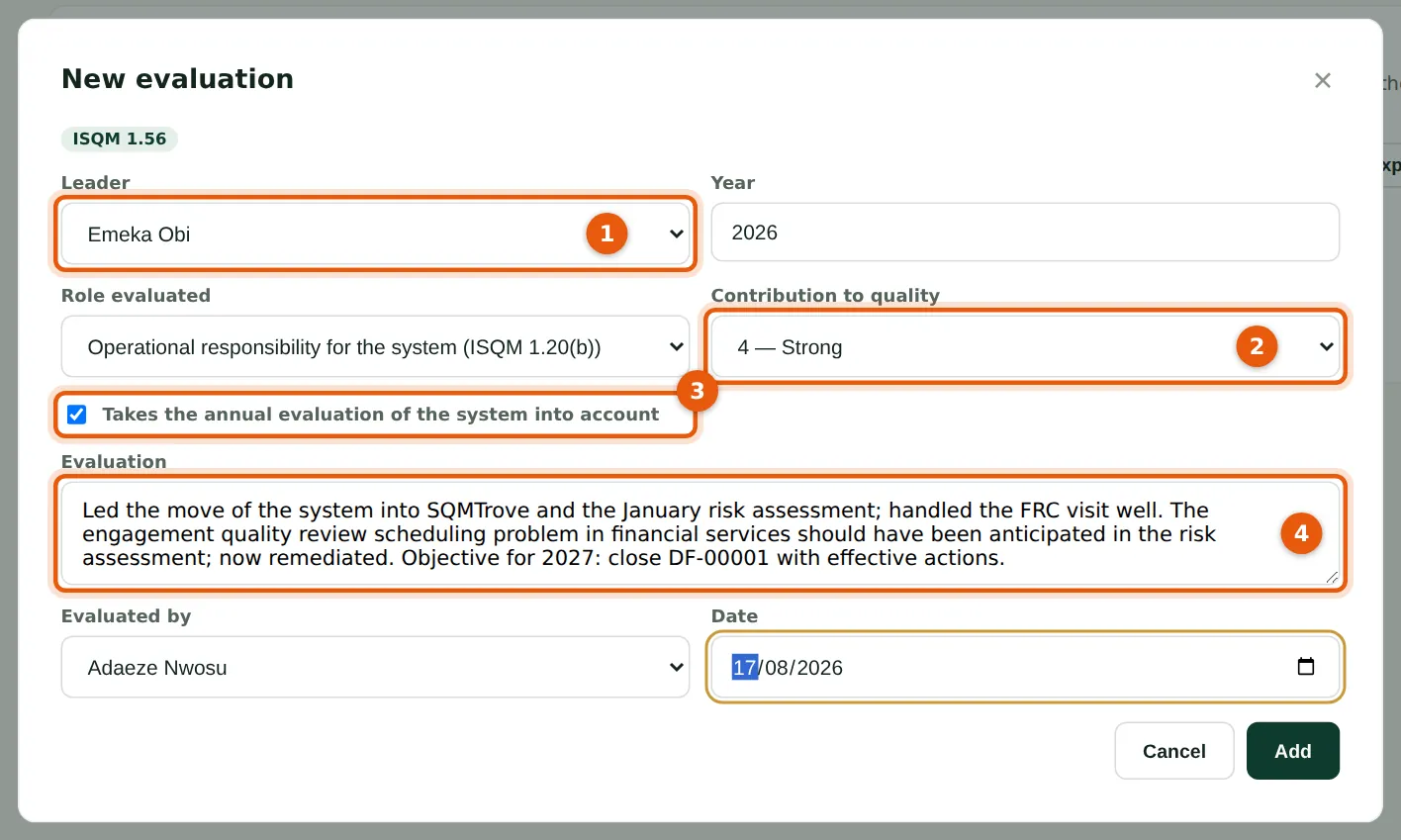
ISQM 1.56 requires the firm to evaluate the performance of the individuals with ultimate and operational responsibility, taking into account the annual evaluation of the system. Choose the leader (1), rate their contribution to quality (2), confirm that the evaluation of the system was taken into account (3) and write the evaluation (4). Nobody evaluates themselves: Adaeze Nwosu is evaluated by the partners' council.
Who
Owner (for operational role holders); the partners' council or equivalent for the Owner.
What to do
- Open Governance & leadership → Leadership evaluations and choose New evaluation.
- Choose the leader (1), the year and the role; rate their contribution to quality (2).
- Tick Takes the annual evaluation of the system into account (3), write the evaluation (4), choose who evaluated and the date, and choose Add.
4.5 The leadership evaluations
Why
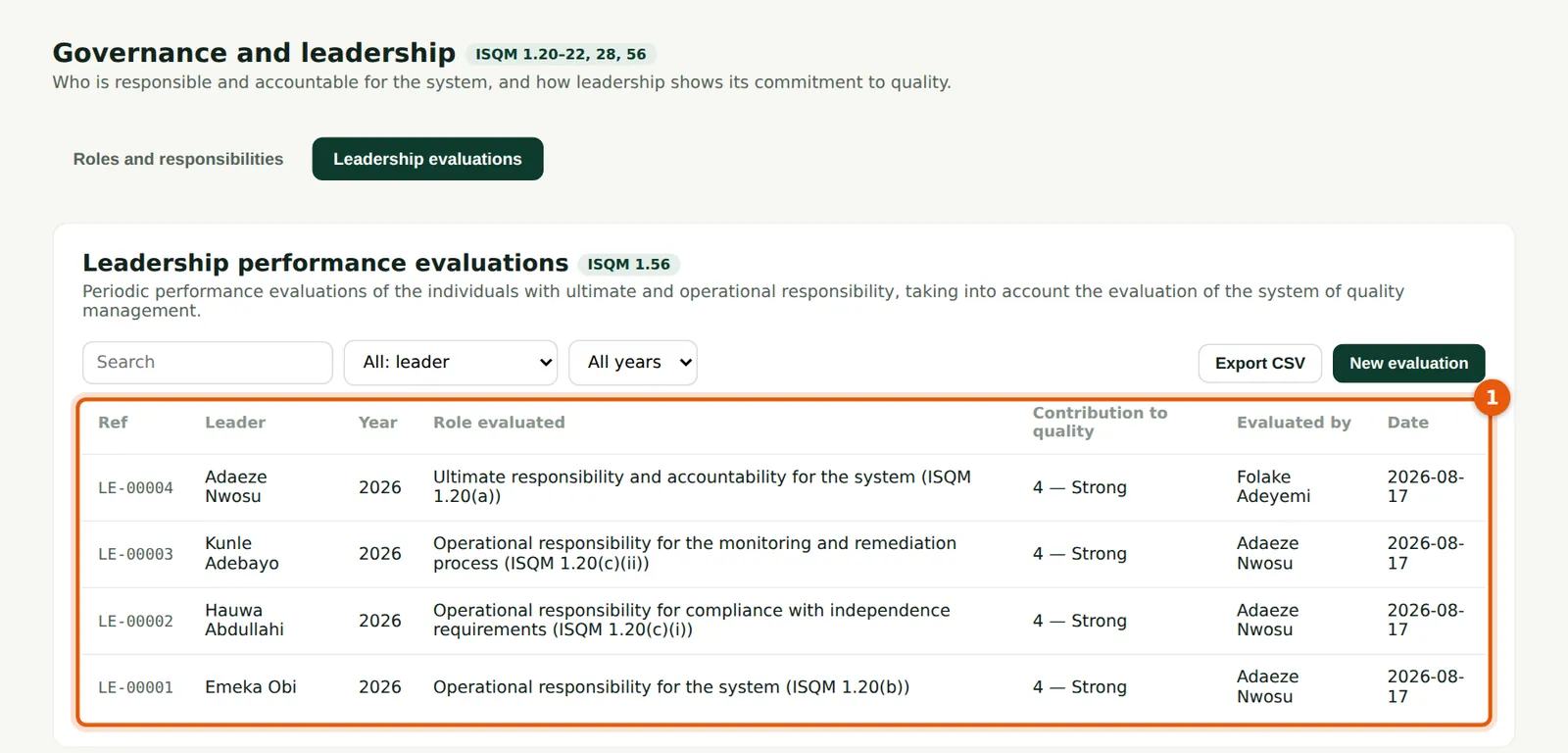
Only people who can approve in governance see every evaluation; each leader sees their own.
Who
Owner.
What to do
- Choose a row to read the evaluation, or Export CSV for the inspection file.
4.6 Governance complete
Why
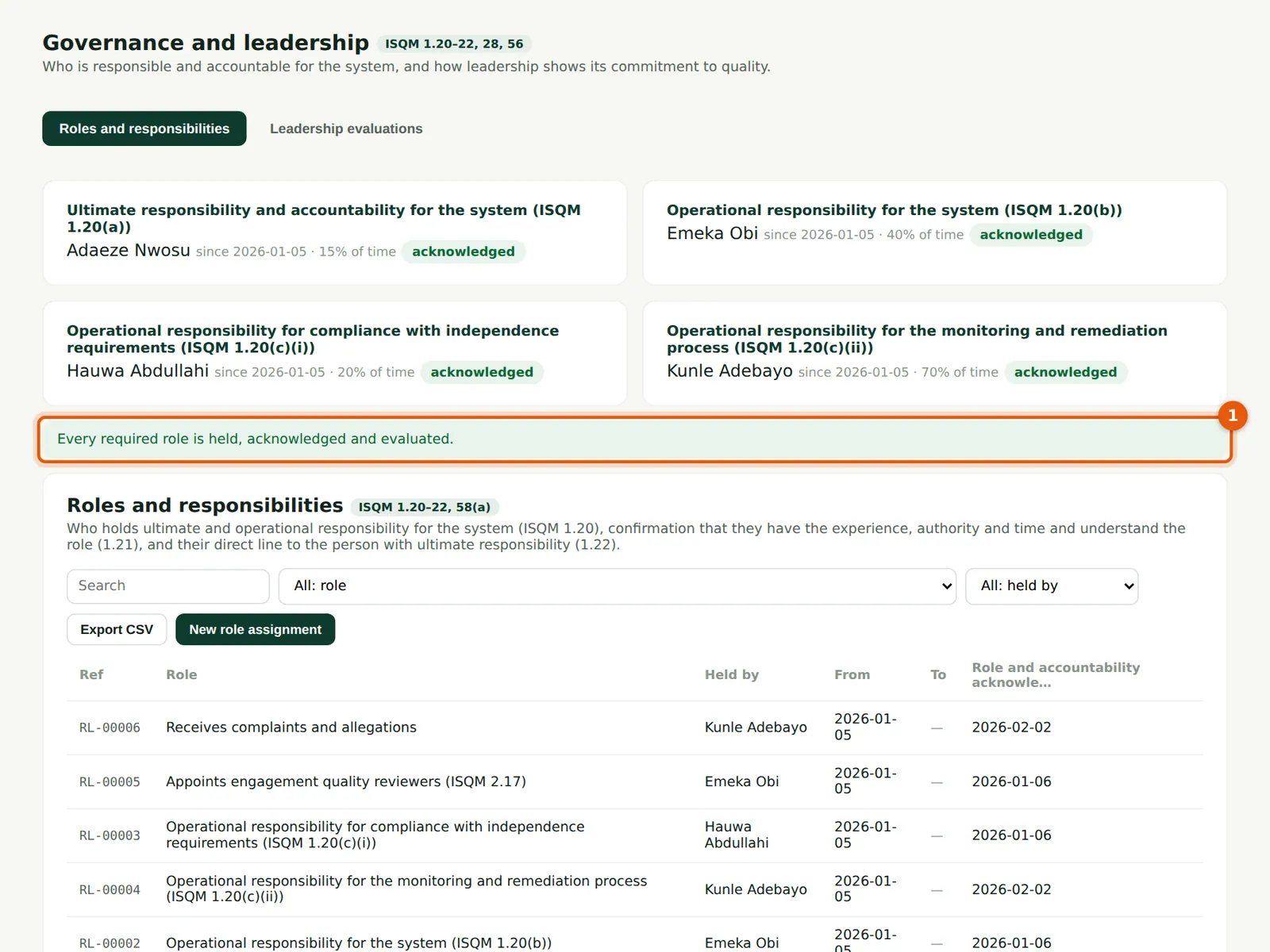
Once each role holder has acknowledged the role and has a performance evaluation, the page confirms that nothing is left to resolve (1). The inspection pack (chapter 16) prints the same information.
Who
Owner and quality lead.
What to do
- Check the banner (1) before the annual evaluation is signed and before an inspection.